Dog Training Basics: 10 Essential Commands + a Simple 4-Week Plan
Best for: new dog owners, first-time puppy training, and anyone who wants real-world obedience (not “perfect competition heel”).
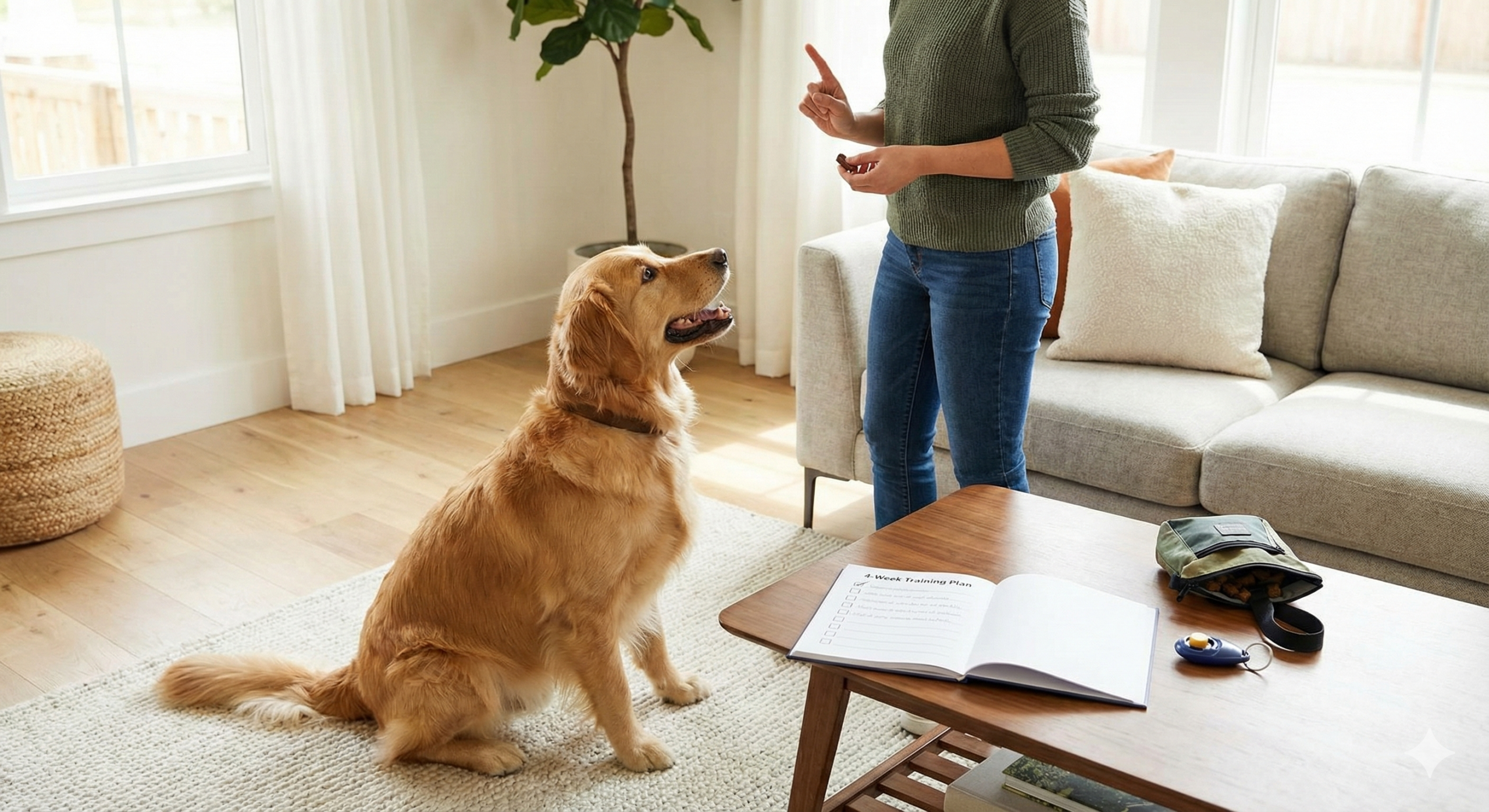
Training philosophy (what actually works): Use positive reinforcement—reward the behaviors you want so they happen more often. Keep sessions short (about 5–10 minutes), end on a win, and avoid punishment that can confuse your dog or make training feel unsafe.
This approach is widely recommended by reputable veterinary and training resources, including the American Kennel Club and VCA. (AKC emphasizes positive reinforcement and short sessions; VCA highlights rewards-based training and avoiding punishment.)
3 Rules That Make Training Faster (and Less Frustrating)
- Reward immediately (timing matters): Give the reward within seconds of the correct behavior, or your dog may connect the treat to the wrong thing. :contentReference[oaicite:0]{index=0}
- Use short, consistent cues: Keep cues simple (“sit”, “down”), and don’t repeat the word over and over. If your dog misses it, make it easier and try again. :contentReference[oaicite:1]{index=1}
- Teach the behavior first, then add the cue: Get the behavior happening reliably, then introduce the word/hand signal so it becomes predictable on cue. :contentReference[oaicite:2]{index=2}
Bonus mindset: training is “trial-and-reward learning.” Dogs repeat behaviors that lead to good outcomes—so set your dog up to succeed and pay them well at the start. :contentReference[oaicite:3]{index=3}
The 10 Essential Dog Commands (with Quick How-To)
These are the cues that solve most daily problems: jumping, pulling, door-dashing, ignoring you outside, stealing food, and “selective hearing.”
1) Sit
Use a treat to lure your dog’s nose up and back so their hips naturally drop. The moment they sit, reward immediately. Keep it quick and upbeat. :contentReference[oaicite:4]{index=4}
2) Down
From a sit or stand, lure the treat down to the floor between the paws. Reward as soon as elbows touch down. (No forcing.) :contentReference[oaicite:5]{index=5}
3) Stay + Release Word
“Stay” is a duration skill—your dog holds position until you release them (like “OK” or “free”). Build time first, then distance, then distractions. :contentReference[oaicite:6]{index=6}
4) Come (Recall)
Start indoors with low distraction. Say “come” once, then reward heavily when they reach you. Make coming to you fun (treats, praise, play). :contentReference[oaicite:7]{index=7}
5) Leave It
Teach your dog that ignoring something earns a better reward. This helps with trash, dropped food, and unsafe objects. (AKC includes “leave it” among core cues.) :contentReference[oaicite:8]{index=8}
6) Drop It
Trade, don’t chase: offer a treat/toy exchange so your dog learns “drop” predicts good things. Keep your tone calm and consistent.
7) Heel / Let’s Go (Loose-Leash Walking)
The goal for most pet owners is polite walking without pulling. AKC notes many trainers use “let’s go” (or “forward”) instead of strict “heel,” especially for puppies. Reward your dog for staying near your side. :contentReference[oaicite:9]{index=9}
8) Place (Go to Bed/Mat)
Send your dog to a mat when guests arrive or during meals. Start by rewarding any step toward the mat, then build duration.
9) Off
Use “off” for counters, furniture (if that’s your rule), and jumping up. Reward “four paws on the floor.” Keep it consistent across the household.
10) Wait
Use “wait” for doors and food bowls. It’s a short pause (different from “stay”) that prevents door-dashing and builds impulse control.
Important: Avoid yelling, harsh leash corrections, or scary punishments. Reputable training guidance warns punishment can create confusion and reduce your dog’s confidence in learning. :contentReference[oaicite:10]{index=10}
Simple 4-Week Dog Training Plan (Beginner-Friendly)
How to use this: Do 2–3 mini sessions per day (5–10 minutes each). Keep rewards high-value at the beginning, then gradually reduce treats as the behavior becomes consistent. :contentReference[oaicite:11]{index=11}
| Week | Main Goals | Daily Mini-Sessions | Real-Life Practice |
|---|---|---|---|
| Week 1 | Sit, Down, Name response (attention) | 2–3 sessions: 10 reps each cue | Ask “sit” before meals, leashing up, and opening doors |
| Week 2 | Stay + Release word, Wait at doors | Short “stay” drills: 3–10 seconds | Practice “wait” at every doorway for 3–5 seconds |
| Week 3 | Come (indoors → yard), Leave it, Drop it | Recall games + trades (no chasing) | Use “leave it” on low-value items, then upgrade difficulty |
| Week 4 | Loose-leash walking (“let’s go”), Place, Off | Micro-walk training: reward every few steps | “Place” during meals/doorbell; “off” for greetings/jumping |
If your dog struggles in Week 3–4: it’s usually distraction level, not “stubbornness.” Go back to an easier environment, reward faster, and rebuild success. AKC also recommends slowing down and adjusting reward value if your dog is struggling. :contentReference[oaicite:12]{index=12}
Common Mistakes That Slow Down Dog Training
- Late rewards: if you reward after your dog stands up or looks away, you teach the wrong thing. :contentReference[oaicite:13]{index=13}
- Repeating cues: “Sit, sit, sit…” teaches your dog that the first cue doesn’t matter. :contentReference[oaicite:14]{index=14}
- Sessions that are too long: short sessions work better, especially for puppies. :contentReference[oaicite:15]{index=15}
- Adding distractions too early: master it in the living room first, then the yard, then the sidewalk.
FAQ
How long does it take to train a dog basic commands?
Most dogs can learn the basics in weeks if you train consistently, keep sessions short, and reward immediately. Complex skills (reliable recall outdoors, calm greetings, loose leash) take longer because distractions are harder than living-room practice. :contentReference[oaicite:16]{index=16}
Is positive reinforcement “bribing”?
Not when done correctly. The goal is to reward desired behavior so it becomes a habit, then gradually reduce treats while keeping praise/play. AKC explains positive reinforcement is based on learning science, not gimmicks. :contentReference[oaicite:17]{index=17}
What if my dog ignores me outside?
That usually means the environment is too distracting. Reduce distance, move to a quieter spot, use higher-value rewards, and rebuild success before trying busy areas again. :contentReference[oaicite:18]{index=18}