Dog Harness Fit Guide: How to Measure, Adjust, and Prevent Rubbing
Best for: new dog owners, dogs who pull, small breeds prone to throat pressure, and anyone dealing with armpit chafing or “harness slipping.”
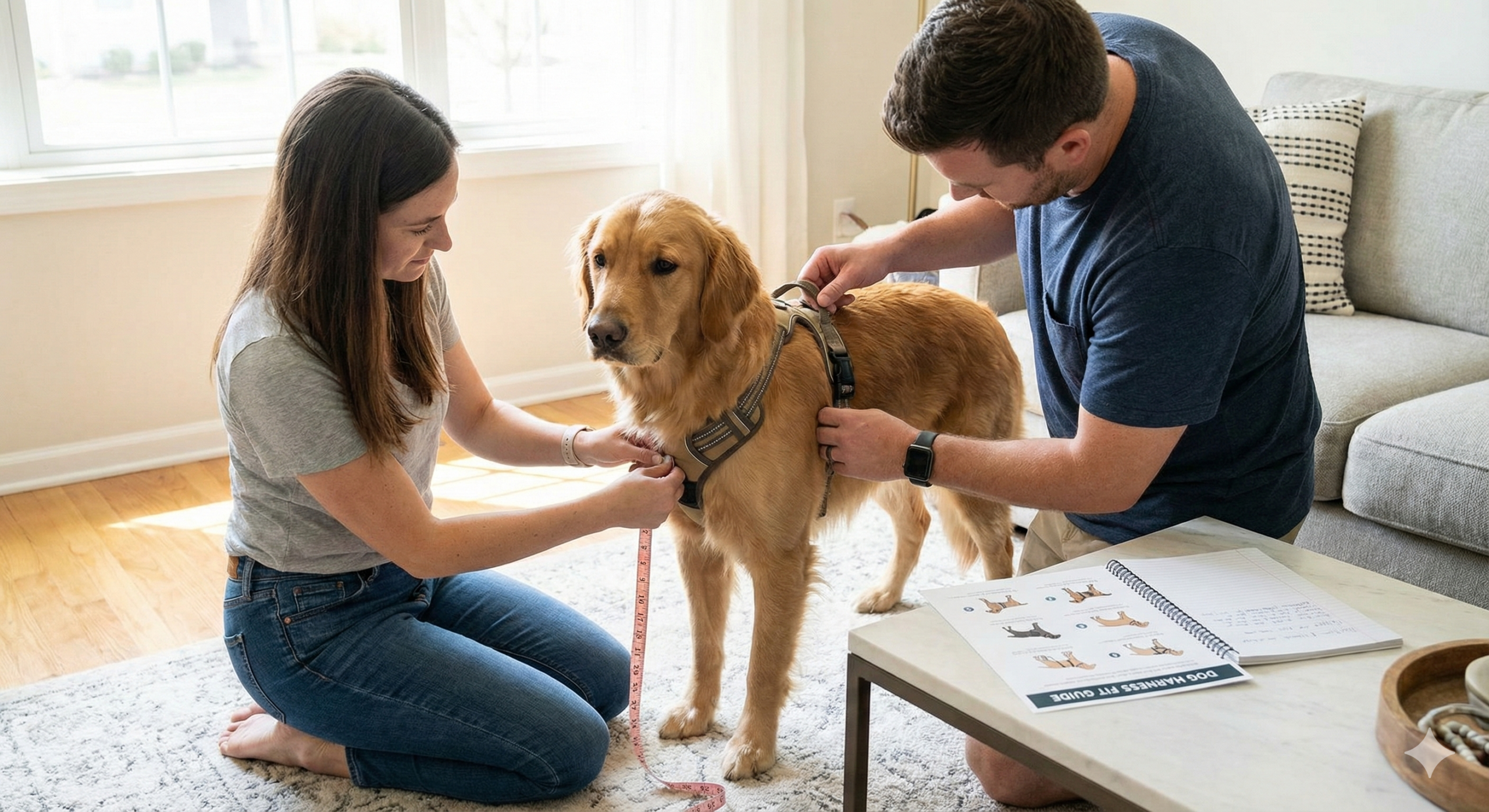
Quick fit rule: A properly fitted harness should feel snug, but you should still be able to slide two fingers between the straps and your dog’s body. If it shifts a lot, rubs behind the elbows, or limits front-leg movement, it needs adjustment (or a different style).
Step 1: Measure Your Dog (So You Don’t Guess the Size)
Harness sizing is not consistent across brands. Measuring takes 2 minutes and saves you returns—and saves your dog discomfort.
1) Chest girth (the most important measurement)
Wrap a soft measuring tape around the widest part of your dog’s rib cage, usually just behind the front legs. Keep the tape snug but not tight: you should still be able to slide two fingers under the tape.
2) Neck girth (the “collar area”)
Measure around the base of the neck, where a collar naturally sits (near the shoulders). Use the same two-finger snugness rule.
Between sizes? Choose the larger size, then adjust down. A too-small harness is uncomfortable and can rub or pinch.
Step 2: Fit Check Checklist (Comfort + Safety)
Put the harness on and walk your dog around the room for 1–2 minutes. Then check these points:
- Front legs move freely: your dog should stride normally without the harness cutting into the shoulder area.
- No rubbing behind the elbows: straps should not sit right in the “armpit” zone where movement is constant.
- Snug but not tight: you can fit two fingers under each strap.
- Centered chest piece: the front section should sit on the chest (not up on the throat).
- Escape test (gentle): if your dog can back out of it, it’s too loose or the style doesn’t match their body shape.
Safety note: Don’t leave a harness on an unsupervised dog for long periods—gear can snag on furniture or crates. Remove it when you’re not watching your dog, especially at home.
Harness Styles Comparison (Which One Fits Your Goal?)
The “best harness” is the one your dog can move in comfortably and that you can fit correctly.
| Harness Type | Best For | Pros | Fit Notes (avoid rubbing) |
|---|---|---|---|
| Back-clip (standard) | Calm walkers, everyday use | Simple, comfortable for many dogs | Ensure belly strap sits behind front legs; avoid “armpit” placement |
| Front-clip (no-pull) | Dogs that pull, training walks | Helps reduce pulling by changing direction | Great short-term tool while training loose-leash skills; watch for shoulder restriction |
| Y-shaped (freedom-of-movement) | Long-term daily walking, active dogs | Often allows better front-leg movement | Look for a chest “Y” that sits on the breastbone, not the throat |
| Step-in | Dogs who hate things going over the head | Easy on/off | Must be snug—these can be easier to slip out of if loose |
| Vest / padded | Short-coated dogs prone to rubbing | Padding can reduce friction | Padding helps, but fit still matters—too loose can still chafe |
How to Prevent Rubbing & Chafing (Armpits, Chest, Neck)
If your dog gets redness where the harness sits, don’t “push through it.” Rubbing usually means placement, looseness, or the wrong style.
Fix #1: Reposition the belly strap
The belly strap should sit behind the front legs—not right in the armpit crease. If it’s too far forward, it will rub every step.
Fix #2: Tighten evenly (not just one strap)
A harness that’s loose will shift, twist, and rub. Adjust each strap gradually so the harness stays centered.
Fix #3: Choose a style that protects movement
Some designs restrict front-leg movement if they sit too close to the shoulder. If your dog’s gait looks “short” or awkward, switch to a design that allows freer motion.
Fix #4: Use padding wisely
Padding can help short-haired dogs, but it won’t fix bad fit. If rubbing continues, change size or style.
When to talk to a vet: if the skin is broken, bleeding, swollen, hot to the touch, or your dog seems painful. Also pause harness use until the area heals.
Common Harness Fit Mistakes (That Cause Slipping or Rubbing)
- Buying by breed/weight instead of measuring
- Too loose “for comfort” (loose usually means more friction and easier escapes)
- Straps sitting behind the elbows (classic armpit chafe problem)
- Chest piece riding up on the throat
- Leaving the harness on all day (more rubbing + snag risks)
FAQ
How tight should a dog harness be?
Snug enough that it won’t shift, but loose enough that you can fit two fingers under the straps. If it’s twisting, it’s too loose. If it’s pinching, it’s too tight.
Where should the belly strap sit?
Behind the front legs (not in the armpit crease). If your dog gets redness under the arms, this is the first thing to fix.
Is a harness better than a collar?
For many dogs—especially pullers—a harness can reduce pressure on the neck and give you more control. Choose a comfortable design and fit it correctly.