Dog Crate Size Chart: How to Choose the Right Crate Size (With Measurements)
Goal: a crate your dog can stand up in, turn around in, and lie down comfortably—without giving so much extra space that potty training becomes harder.
Quick answer: Measure your dog’s height and length, then add about 3–4 inches to each measurement. That’s your starting point for crate size.
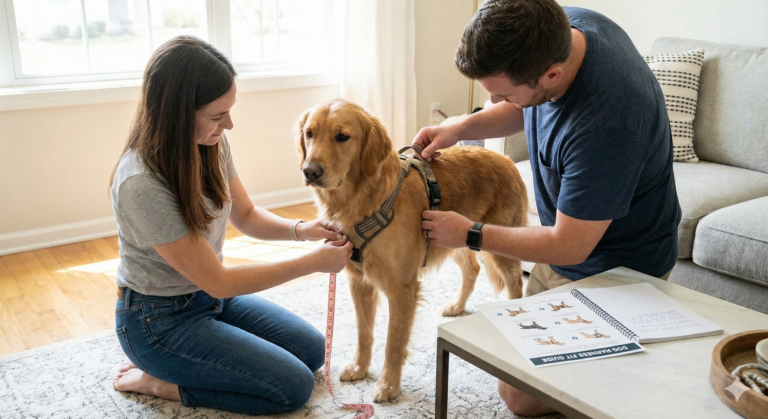
How to Measure Your Dog for the Right Crate Size
You only need a tape measure (or a phone measuring app) and 2 minutes.
- Measure height: with your dog standing, measure from the floor to the top of the head.
If your dog has tall ears that stand up (like a German Shepherd), measure to the top of the ears as well. - Measure length: measure from the tip of the nose to the tip of the tail.
(For very fluffy tails, measure to the tail tip in its natural position—don’t stretch it.) - Add extra space: add 3–4 inches to both height and length for comfort.
If you’ll use a thick bed, add a little extra height so your dog can still sit/stand comfortably.
Sanity check: your dog should be able to stand up, turn around, and lie down naturally inside the crate. Think “cozy bed,” not “big bedroom.”
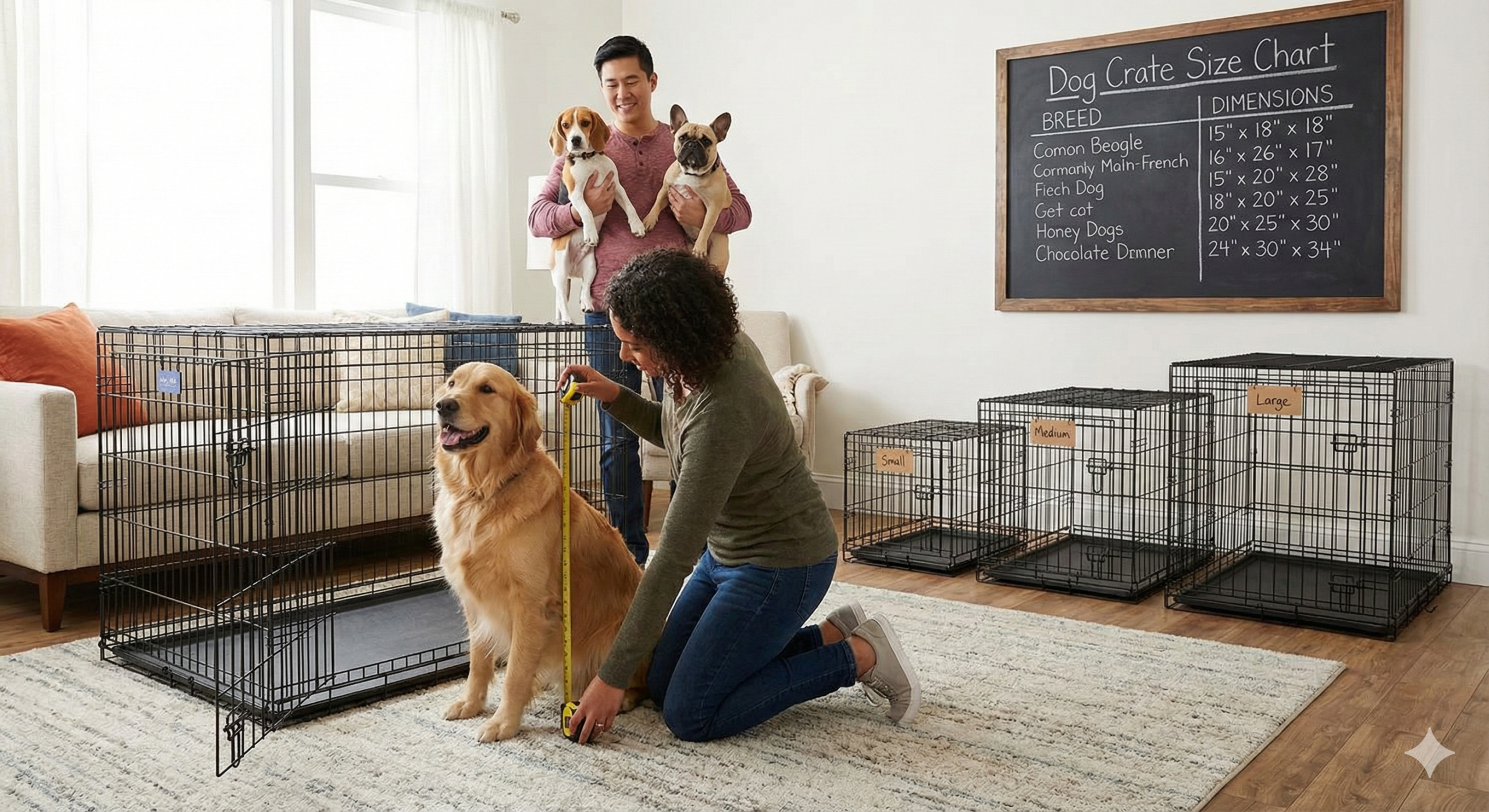
Dog Crate Size Chart (Most Common U.S. Crate Sizes)
Crates are usually labeled by the length of the crate (for example, a “36-inch crate”). Always check the internal dimensions when possible, because they vary by brand.
| Crate Label | Best Fit (Rule of Thumb) | Common Examples | Good For |
|---|---|---|---|
| 24-inch | Dogs up to ~22 inches tall (small/compact builds) | Mini Poodle, Pug, Boston Terrier, Dachshund (standard), small mixed breeds | Apartment living, small adult dogs |
| 30-inch | Dogs up to ~24 inches tall | Beagle (large), Cocker Spaniel, French Bulldog, small Border Collie mixes | Medium-small dogs, first-time crate training |
| 36-inch | Dogs up to ~27 inches tall | Australian Shepherd, Bulldog, Border Collie, Standard Schnauzer | Most medium dogs |
| 42-inch | Dogs up to ~30 inches tall | Labrador Retriever, Golden Retriever, German Shepherd (many), Boxer | Large breeds, long-bodied dogs |
| 48-inch | Dogs up to ~32 inches tall | Great Dane (smaller), Mastiff mixes, very large Shepherds | XL dogs, tall/long builds |
Best practice: trust your measurements more than breed guesses. Two dogs of the same breed can need different crate sizes.
Puppies: How to Size a Crate Without Potty Accidents
If you buy a crate “for the adult size” but your puppy is still tiny, the crate can become too spacious—some puppies will pee in one corner and sleep in the other.
- Choose an adult-size crate (if you know your puppy’s expected adult size).
- Use a divider panel to reduce the usable space at first.
- Expand gradually as your puppy grows and stays clean in the crate.
Simple rule: during potty training, the crate should be just big enough for your puppy to stand, turn, and lie down—no extra “bathroom corner.”
Wire vs Plastic vs Soft Crate: Does Type Affect Sizing?
Size comes first, then choose a crate style based on your dog’s needs.
- Wire crates: great airflow, easy to clean, often include dividers. Good for home use.
- Plastic “airline-style” crates: can feel den-like and calmer for some dogs; often preferred for travel.
- Soft crates: lightweight for calm, crate-trained dogs; not ideal for chewers or escape artists.
If you’re choosing a crate for air travel, airlines/cargo rules may require additional clearance and specific construction features.
Always check your airline’s kennel guidelines before purchasing a travel crate.
Common Dog Crate Sizing Mistakes (and How to Avoid Them)
- Going too big: makes potty training harder and can reduce the “den” feeling that helps many dogs relax.
- Ignoring internal dimensions: the label (like “36-inch”) is not standardized across brands.
- Buying for looks, not stability: flimsy latches or weak frames can become a safety issue for strong dogs.
- Skipping the bed measurement: thick beds reduce the usable interior height.
FAQ
What size crate does my dog need?
Measure your dog’s height (floor to head/ears) and length (nose to tail), then add about 3–4 inches. Pick a crate that matches those interior dimensions.
Is it okay if my dog’s crate is bigger?
A little extra space is fine for comfort, but “too big” can cause potty training setbacks. If your dog is still learning, use a divider so the space stays cozy.
Should my dog be able to stand up in the crate?
Yes. Your dog should be able to stand, turn around, and lie down comfortably without touching the top or sides.