
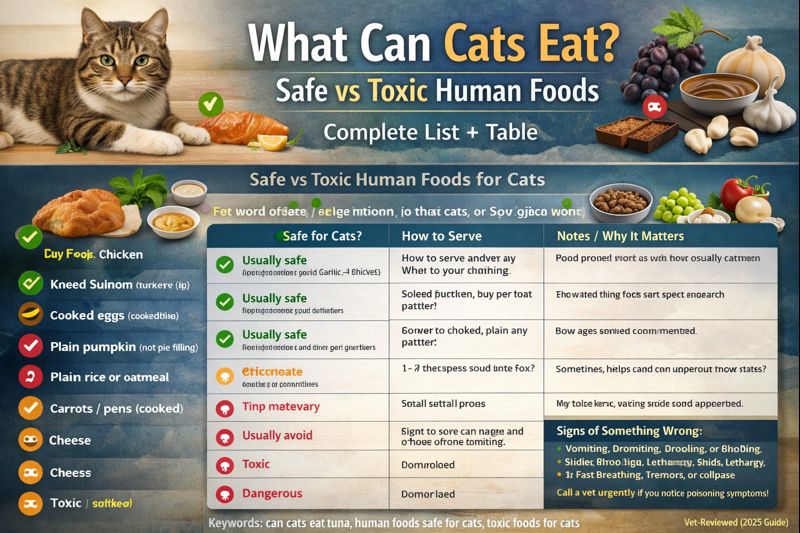
What Can Cats Eat? Safe vs Toxic Human Foods (Complete List + Table)
Searching “what can cats eat” is incredibly common—because cats are curious, and we all want to share (or at least not accidentally harm them). The key rule is simple: cats are obligate carnivores, meaning their bodies are built for animal-based protein. Many human foods can be offered only as tiny, occasional treats, while others are dangerous even in small amounts.
Important: This guide is for general education. If your cat ate something potentially toxic or is vomiting, drooling, weak, or acting “off,” contact a veterinarian urgently.
Quick Guidelines Before You Share Any Food
- Keep treats small: Treat foods should be a small part of the diet (not a replacement for complete cat food).
- Avoid seasoning: No onion/garlic, spicy sauces, heavy salt, or sugary coatings.
- Cook it plain: Raw meat/eggs can carry bacteria; stick with cooked, unseasoned options.
- Watch portions: Cats have small stomachs—too much “safe” food can still cause diarrhea.
- Consider health issues: Cats with kidney disease, diabetes, pancreatitis, or allergies need stricter rules.
Safe vs Unsafe Foods for Cats (Easy Table)
Use this table as a quick decision guide. “Safe” doesn’t mean “healthy in large amounts”—it means generally acceptable in small portions for most healthy cats.
| Food | Safe for Cats? | How to Serve | Notes / Why It Matters |
|---|---|---|---|
| Cooked chicken/turkey (plain) | ✅ Usually safe | Small bite-size pieces, no bones, no skin seasoning | Great protein treat; avoid fried or salty versions |
| Cooked salmon (plain) | ✅ Usually safe | Flaked, boneless, tiny portions | Too much fatty fish can upset stomach |
| Eggs (cooked) | ✅ Usually safe | Scrambled/boiled, plain, tiny portion | Raw eggs are not recommended |
| Plain pumpkin (not pie filling) | ✅ Often safe | 1–2 teaspoons mixed into food | Sometimes helps mild constipation/loose stool |
| Plain rice or oatmeal | ✅ Sometimes | Small spoon with cooked meat | Not ideal as a staple; cats need meat-based nutrition |
| Carrots / peas (cooked) | ✅ Sometimes | Soft, small pieces | Some cats like veggies, but they’re optional |
| Cheese | ⚠️ Caution | Tiny nibble only | Many cats are lactose intolerant → diarrhea |
| Milk | ❌ Usually avoid | Skip (or use vet-approved lactose-free cat milk) | Common cause of stomach upset |
| Onion / garlic / chives | ☠️ Toxic | Do not feed | Can damage red blood cells and cause serious illness |
| Chocolate | ☠️ Toxic | Do not feed | Contains methylxanthines; dangerous for pets |
| Grapes / raisins | ☠️ Potentially toxic | Do not feed | Risk of kidney damage in pets; avoid entirely |
| Alcohol | ☠️ Toxic | Do not feed | Even small amounts can be life-threatening |
| Caffeine (coffee/tea/energy drinks) | ☠️ Toxic | Do not feed | Can cause rapid heart rate, tremors, seizures |
| Xylitol (sugar-free gum/candy) | ☠️ Dangerous | Do not feed | Extremely risky for pets; keep out of reach |
| Cooked bones | ☠️ Dangerous | Do not feed | Splinter risk → choking, gut injury |
Best “Human Food” Treats for Cats (If You Want the Safest Options)
If you want simple choices with the lowest risk, stick to:
- Plain cooked chicken/turkey (boneless, no seasoning)
- Plain cooked egg (small portion)
- Plain cooked fish (boneless, occasional)
- A teaspoon of plain pumpkin (only if your cat tolerates it)
Signs Your Cat Ate Something That Doesn’t Agree With Them
Stop offering the food and monitor your cat if you see mild signs like soft stool. Contact a vet urgently if symptoms are severe or persistent.
- Vomiting (especially repeated)
- Diarrhea lasting more than 24 hours
- Drooling, pawing at the mouth
- Weakness, hiding, unusual sleepiness
- Fast breathing, tremors, or collapse
FAQ
Can cats eat tuna?
Small amounts of plain tuna can be okay as an occasional treat, but it shouldn’t replace balanced cat food. Too much can lead to nutritional imbalance and stomach upset.
Can cats eat bread?
A tiny piece of plain bread is usually not toxic, but it’s not useful nutrition for cats. Avoid bread with garlic, onion, raisins, or sweeteners.
Can cats eat fruit?
Some fruits in tiny amounts may be tolerated, but cats don’t need fruit. Avoid grapes/raisins completely, and don’t offer sugary fruit frequently.