
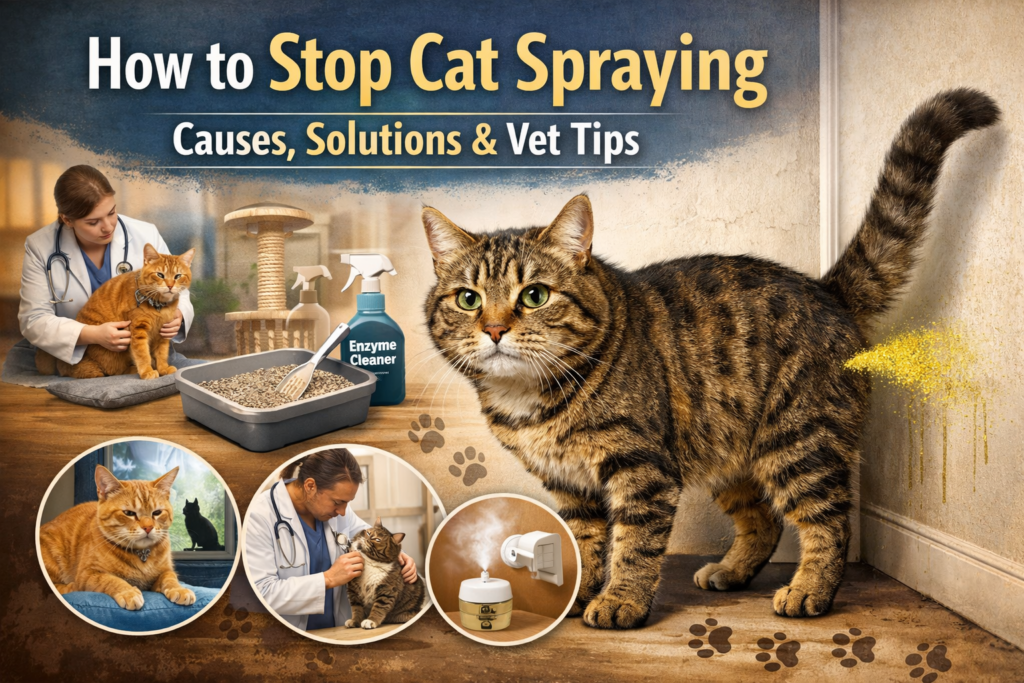
How to Stop Cat Spraying: Causes, Solutions, and Vet Tips
Updated: December 17, 2025
Cat spraying is one of the most searched cat behavior problems—and it can be frustrating, especially when it happens on walls, doors, curtains, or furniture. The good news is that spraying is usually fixable once you understand the cause. In this guide, you’ll learn how to stop cat spraying step by step using practical methods recommended by vets and behavior experts.
What Is Cat Spraying?
Spraying is a type of marking behavior where a cat releases a small amount of urine (often while standing with the tail raised) to communicate territory or stress. It’s different from normal urination in a litter box. Knowing this difference helps you choose the right solution.
Top Reasons Cats Start Spraying
- Stress or anxiety: New home, new pet, visitors, renovations, or changes in routine.
- Territory conflicts: Neighborhood cats outside, multi-cat tension inside the home.
- Not neutered/spayed: Intact males and females spray more frequently.
- Medical issues: UTIs, bladder inflammation, pain, or other health problems.
- Litter box problems: Dirty box, wrong location, wrong litter type, or not enough boxes.
How to Stop Cat Spraying: 9 Proven Steps
- Spay or neuter your cat (if not already). This is often the biggest fix.
- Rule out medical causes by visiting a veterinarian—especially if spraying started suddenly.
- Use an enzymatic cleaner to remove urine odor completely. Regular cleaners may leave scent traces.
- Improve litter box setup: Aim for “number of cats + 1” boxes, placed in quiet areas.
- Reduce stress triggers: Keep a stable routine for feeding and playtime.
- Add vertical space: Cat trees and shelves help cats feel secure in multi-cat homes.
- Block outdoor cat views near windows with frosted film or curtains if neighborhood cats trigger marking.
- Use pheromone diffusers to support calm behavior (especially after changes at home).
- Rebuild positive habits: Reward litter box use, increase daily interactive play, and avoid punishment.
When to See a Vet or Behavior Specialist
If your cat sprays frequently, seems in pain, urinates outside the box often, or you’ve tried the steps above for 2–3 weeks without improvement, it’s time to get professional help. Some cats benefit from a structured behavior plan, and in some cases, vets may suggest short-term medication for anxiety.
FAQ
Does vinegar stop cats from spraying?
Vinegar may reduce smell temporarily, but it usually doesn’t remove urine odor completely. Enzymatic cleaners are far more effective.
Will my cat stop spraying after neutering?
Many cats reduce or stop spraying after neutering, especially if it’s done early. If the habit is established, you may still need behavioral steps.